Guitar arpeggio
D Major 9 Guitar Arpeggio
D Major 9 is a five-note arpeggio built from D, F#, A, C#, and E. It is also commonly called D Major Ninth and DMaj9. Use it to study chord tones, interval formulas, and guitar fretboard positions.
- Chord tones
- D, F#, A, C#, E
- Formula
- 1 3 5 7 9
- Semitones
- 0 4 7 11 14
- Chord symbols
- Dmaj9, DM9
- Also called
- D Major NinthDMaj9
How to read this arpeggio
The chord tones are shown as pitch classes first. In the fretboard tool, square markers represent D root notes, while circular markers represent the remaining tones in the arpeggio.
Use the interactive fretboard to locate the D root notes and connect the remaining major 9 chord tones across standard tuning.
This same arpeggio shape is also commonly called D Major Ninth or DMaj9.
Chord construction and defining tones
D major 9 is defined by 3 (F#), 7 (C#), and 9 (E). It extends a major seventh chord with the ninth while retaining the natural seventh.
Harmonic use
Use this arpeggio over Dmaj9 and spacious tonic-major or major-seventh harmony that includes the ninth.
Practice this arpeggio on guitar
- Play the D Major 9 arpeggio from one D root to the next in at least two fretboard positions, saying each note name and interval degree aloud.
- Practice 3 (F#), 7 (C#), and 9 (E) as the upper structure, then reconnect them to the root and fifth.
- Improvise over Dmaj9 and alternate resolutions from the ninth to the root with resolutions from the seventh to the root.
Fretboard diagram
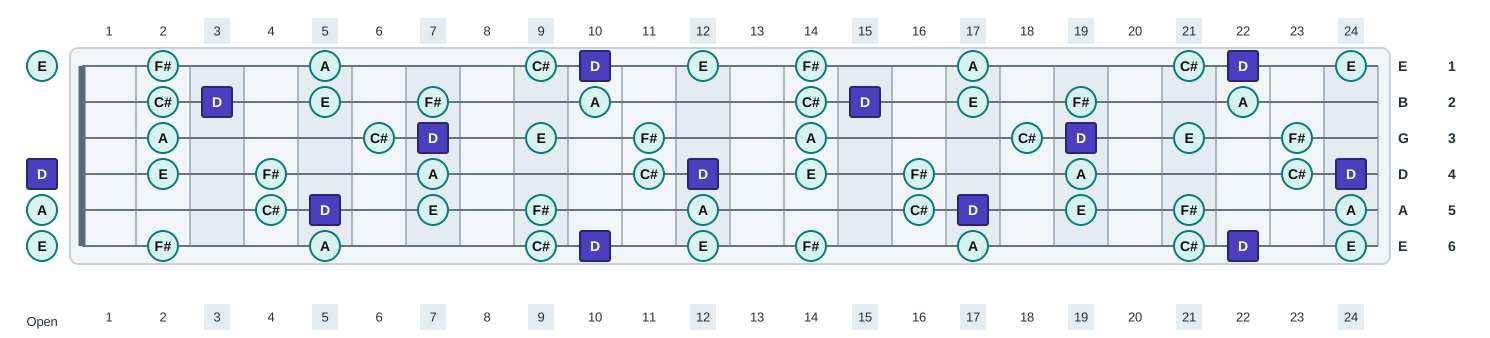
Open this arpeggio in the fretboard tool
Start with D Major 9 loaded, then adjust tuning, labels, colors, fret count, and orientation.
Open in interactive fretboard