Guitar chord
A Minor Open Chord
A common open A minor chord shape in standard tuning.
- Symbol
- Am
- Chord tones
- A, C, E
- Formula
- 1 b3 5
- Tuning
- Standard
- Frets, low to high
- X 0 2 2 1 0
- Fingers, low to high
- - - 2 3 1 -
Chord fingering diagram
Read the chart vertically with the nut at the top. X means mute the string, markers above the nut are played open, and numbered markers show fretting-hand fingers.
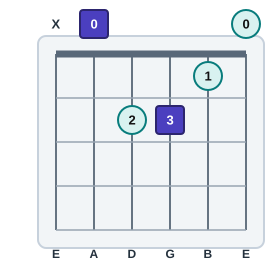
How to play Am
Fretting hand
Place finger 2 on the 4th string at fret 2, finger 3 on the 3rd string at fret 2, and finger 1 on the 2nd string at fret 1. Fret each note close behind the fret wire without resting directly on it.
Clean sound check
Let the 5th string and 1st string ring open. Keep the 6th string muted. Arch the fretting fingers so their sides do not silence neighboring strings, then pick every sounding string separately.
Sound and use
Am has a clear minor-triad sound. It works as a minor-key home chord or as a diatonic minor chord inside a major key, depending on the surrounding progression.
Chord tone reference
Use the matching arpeggio page to study the same notes across the full fretboard, or open those chord tones directly in the interactive tool.
More A chords
Keep the root fixed and compare how the third, seventh, suspended tones, or added tones change the sound.
More Minor chord shapes
Practice the same chord quality from other roots to reinforce its interval sound and common fingering patterns.