Guitar scale
Ab Lydian Guitar Scale
Ab Lydian is a seven-note scale built from Ab, Bb, C, D, Eb, F, and G. It is the 4th relative mode of Eb major. Use it to study the scale's notes, interval formula, and guitar fretboard positions.
- Notes
- Ab, Bb, C, D, Eb, F, G
- Formula
- 1 2 3 #4 5 6 7
- Semitones
- 0 2 4 6 7 9 11
- Parent scale
- Eb major
How to read this scale
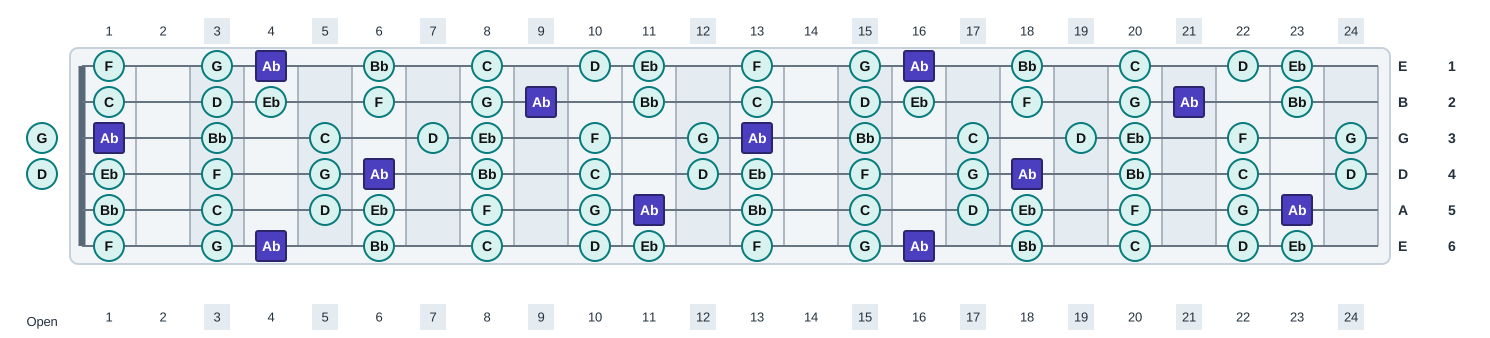
The notes are shown as pitch classes first. Square markers representAb root notes in the fretboard view, while circular markers represent the other notes in the scale.
Use the interactive fretboard to locate the Ab root notes and connect the remaining lydian tones across standard tuning.
Sound and defining tones
Ab Lydian keeps a major third but raises the fourth: 3 (C) and #4 (D). The raised fourth removes the ordinary major scale's half-step clash above the third and supplies the mode's bright, floating color.
- Characteristic tones
- 3C#4D
Fretboard diagram
Open this scale in the fretboard tool
Start with Ab Lydian loaded, then adjust tuning, labels, colors, fret count, and orientation.
Open in interactive fretboardCommon chords and contexts
Use Ab Lydian over Ab major, Abmaj7, or Abmaj7#11 harmony when the raised fourth is supported. A sustained major chord or pedal tone makes the modal color easiest to hear.
- Use Ab Lydian over Abmaj7 or Abmaj7#11 sounds when the raised 4 belongs in the harmony.
- It keeps a major quality while adding a brighter, floating color than plain major.
Practice this scale on guitar
- Play Ab Lydian from one Ab root to the next in at least two fretboard positions, saying each note name and scale degree aloud.
- Play major-triad tones first, then add 3 (C) and #4 (D) so the raised fourth is heard as a color tone rather than an accidental passing note.
- Sustain a major chord rooted on Ab and alternate phrases that use the perfect fifth with phrases that linger on the raised fourth before resolving.