Guitar scale
A Major Blues Guitar Scale
A Major Blues is a six-note scale built from A, B, C, C#, E, and F#. Use it to study the scale's notes, interval formula, and guitar fretboard positions.
- Notes
- A, B, C, C#, E, F#
- Formula
- 1 2 b3 3 5 6
- Semitones
- 0 2 3 4 7 9
How to read this scale
The notes are shown as pitch classes first. Square markers representA root notes in the fretboard view, while circular markers represent the other notes in the scale.
Use the interactive fretboard to locate the A root notes and connect the remaining major blues tones across standard tuning.
Sound and defining tones
A major blues places the flat third beside the major third: b3 (C), 3 (C#), and 6 (F#). Movement between those two thirds creates the scale's central blues inflection while the sixth preserves its brighter major-pentatonic base.
- Characteristic tones
- b3C3C#6F#
Fretboard diagram
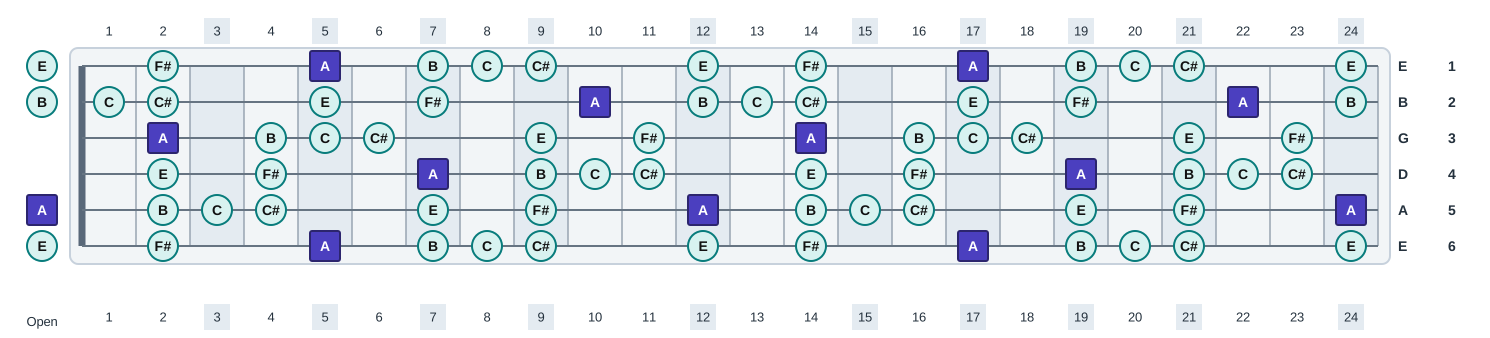
Open this scale in the fretboard tool
Start with A Major Blues loaded, then adjust tuning, labels, colors, fret count, and orientation.
Open in interactive fretboardCommon chords and contexts
Use A major blues over major and dominant blues harmony centered on A, especially in country, soul, jump blues, and brighter blues phrases. Follow the chord changes when the progression moves to IV or V.
- Use A major blues over A major blues, dominant blues, country, soul, and jump-blues phrases.
- It adds a blue-note color to major pentatonic while keeping a brighter major sound.
Practice this scale on guitar
- Play A Major Blues from one A root to the next in at least two fretboard positions, saying each note name and scale degree aloud.
- Slide, hammer, or bend from the flat third toward the major third in b3 (C), 3 (C#), and 6 (F#), then resolve to the root, fifth, or sixth.
- Alternate A major-blues and minor-blues phrases over a dominant blues backing and listen to how each third relates to the current chord.