Guitar scale
C# Dorian Guitar Scale
C# Dorian is a seven-note scale built from C#, D#, E, F#, G#, A#, and B. It is the 2nd relative mode of B major. Use it to study the scale's notes, interval formula, and guitar fretboard positions.
- Notes
- C#, D#, E, F#, G#, A#, B
- Formula
- 1 2 b3 4 5 6 b7
- Semitones
- 0 2 3 5 7 9 10
- Parent scale
- B major
How to read this scale
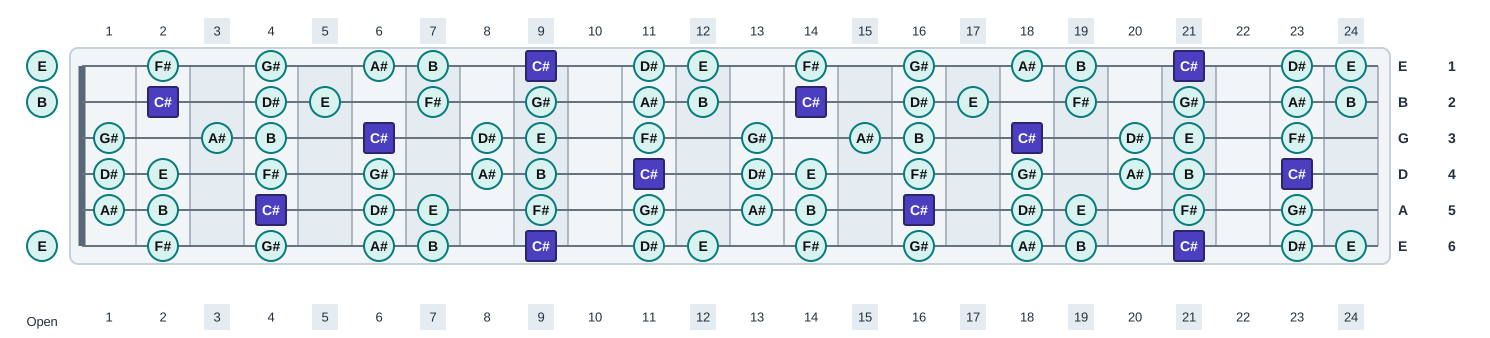
The notes are shown as pitch classes first. Square markers representC# root notes in the fretboard view, while circular markers represent the other notes in the scale.
Use the interactive fretboard to locate the C# root notes and connect the remaining dorian tones across standard tuning.
Sound and defining tones
C# Dorian combines a minor third with a natural sixth: b3 (E) and 6 (A#). The minor third keeps the mode minor, while the natural sixth makes it brighter than C# natural minor.
- Characteristic tones
- b3E6A#
Fretboard diagram
Open this scale in the fretboard tool
Start with C# Dorian loaded, then adjust tuning, labels, colors, fret count, and orientation.
Open in interactive fretboardCommon chords and contexts
Use C# Dorian over a sustained C#m or C#m7 sound, especially when the harmony includes the natural sixth and does not establish the flat sixth from natural minor.
- Use C# Dorian over C#m7 chords when a minor sound needs a natural 6.
- It is common in funk, jazz, fusion, and minor vamp situations.
Practice this scale on guitar
- Play C# Dorian from one C# root to the next in at least two fretboard positions, saying each note name and scale degree aloud.
- Build two- and three-note ideas that move between b3 (E) and 6 (A#), listening for the contrast between the minor third and natural sixth.
- Loop C#m7 as a static vamp and end alternating phrases on the root, flat third, and natural sixth to hear their different levels of stability.