Guitar scale
E Major (Ionian) Guitar Scale
E Major (Ionian) is a seven-note scale built from E, F#, G#, A, B, C#, and D#. It is the 1st relative mode of E major. It is also commonly called E Ionian. Use it to study the scale's notes, interval formula, and guitar fretboard positions.
- Notes
- E, F#, G#, A, B, C#, D#
- Formula
- 1 2 3 4 5 6 7
- Semitones
- 0 2 4 5 7 9 11
- Parent scale
- E major
- Also called
- E Ionian
How to read this scale
The notes are shown as pitch classes first. Square markers representE root notes in the fretboard view, while circular markers represent the other notes in the scale.
Use the interactive fretboard to locate the E root notes and connect the remaining major (ionian) tones across standard tuning.
This same note pattern is also commonly called E Ionian.
Sound and defining tones
E major gets its clear major quality from 3 (G#) and 7 (D#). The major third establishes the chord quality, while the major seventh acts as a leading tone that pulls strongly back to E.
- Characteristic tones
- 3G#7D#
Fretboard diagram
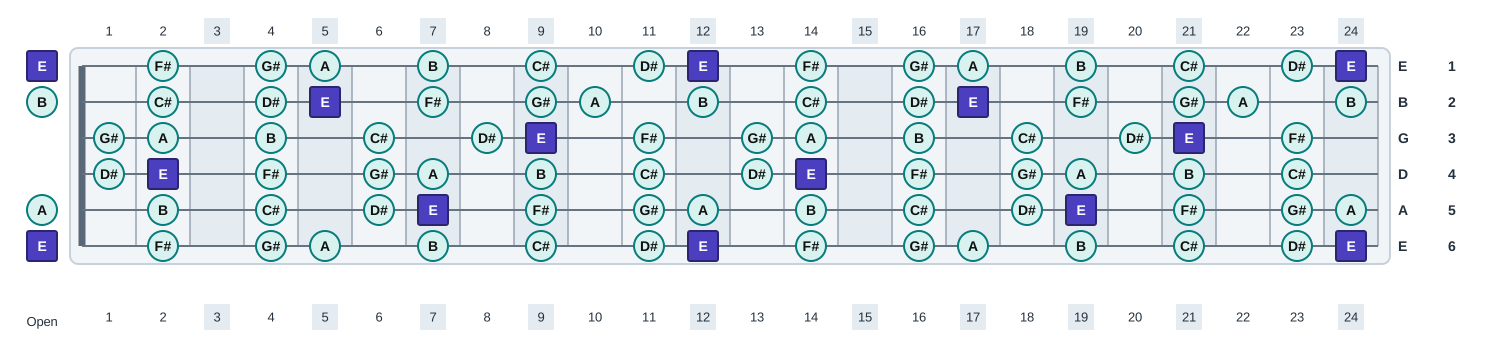
Open this scale in the fretboard tool
Start with E Major (Ionian) loaded, then adjust tuning, labels, colors, fret count, and orientation.
Open in interactive fretboardCommon chords and contexts
Use E major as the complete note set for diatonic harmony in the key of E. Follow the chord tones as the progression changes instead of treating every scale note as equally stable.
- Use E major over E major, Emaj7, and straightforward major-key progressions.
- It is also the parent scale for the seven major-scale modes that share the same notes.
Practice this scale on guitar
- Play E Major (Ionian) from one E root to the next in at least two fretboard positions, saying each note name and scale degree aloud.
- Alternate short phrases that land on 3 (G#) and 7 (D#), then resolve each phrase to the nearest root or fifth.
- Improvise over a simple E major progression and target the current chord's root, third, or fifth on each chord change.