Guitar scale
F# Major Blues Guitar Scale
F# Major Blues is a six-note scale built from F#, G#, A, A#, C#, and D#. Use it to study the scale's notes, interval formula, and guitar fretboard positions.
- Notes
- F#, G#, A, A#, C#, D#
- Formula
- 1 2 b3 3 5 6
- Semitones
- 0 2 3 4 7 9
How to read this scale
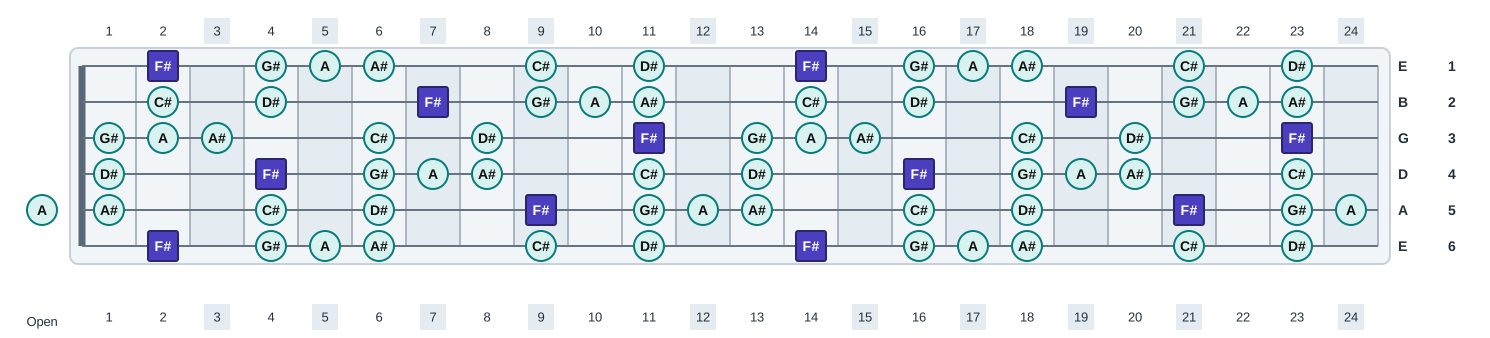
The notes are shown as pitch classes first. Square markers representF# root notes in the fretboard view, while circular markers represent the other notes in the scale.
Use the interactive fretboard to locate the F# root notes and connect the remaining major blues tones across standard tuning.
Sound and defining tones
F# major blues places the flat third beside the major third: b3 (A), 3 (A#), and 6 (D#). Movement between those two thirds creates the scale's central blues inflection while the sixth preserves its brighter major-pentatonic base.
- Characteristic tones
- b3A3A#6D#
Fretboard diagram
Open this scale in the fretboard tool
Start with F# Major Blues loaded, then adjust tuning, labels, colors, fret count, and orientation.
Open in interactive fretboardCommon chords and contexts
Use F# major blues over major and dominant blues harmony centered on F#, especially in country, soul, jump blues, and brighter blues phrases. Follow the chord changes when the progression moves to IV or V.
- Use F# major blues over F# major blues, dominant blues, country, soul, and jump-blues phrases.
- It adds a blue-note color to major pentatonic while keeping a brighter major sound.
Practice this scale on guitar
- Play F# Major Blues from one F# root to the next in at least two fretboard positions, saying each note name and scale degree aloud.
- Slide, hammer, or bend from the flat third toward the major third in b3 (A), 3 (A#), and 6 (D#), then resolve to the root, fifth, or sixth.
- Alternate F# major-blues and minor-blues phrases over a dominant blues backing and listen to how each third relates to the current chord.