Guitar arpeggio
G Minor Guitar Arpeggio
G Minor is a three-note arpeggio built from G, Bb, and D. It is also commonly called G Minor Triad. Use it to study chord tones, interval formulas, and guitar fretboard positions.
- Chord tones
- G, Bb, D
- Formula
- 1 b3 5
- Semitones
- 0 3 7
- Chord symbols
- Gm, Gmin
- Also called
- G Minor Triad
How to read this arpeggio
The chord tones are shown as pitch classes first. In the fretboard tool, square markers represent G root notes, while circular markers represent the remaining tones in the arpeggio.
Use the interactive fretboard to locate the G root notes and connect the remaining minor chord tones across standard tuning.
This same arpeggio shape is also commonly called G Minor Triad.
Chord construction and defining tones
G minor combines b3 (Bb) and 5 (D). The minor third establishes the minor quality, while the perfect fifth keeps the triad grounded.
Harmonic use
Use this arpeggio to outline Gm and other minor chords without adding seventh- or ninth-chord color.
Practice this arpeggio on guitar
- Play the G Minor arpeggio from one G root to the next in at least two fretboard positions, saying each note name and interval degree aloud.
- Move between the root and b3 (Bb) and 5 (D), giving extra attention to the minor third that identifies the chord quality.
- Improvise compact phrases over Gm and finish each phrase on the root, minor third, or fifth.
Fretboard diagram
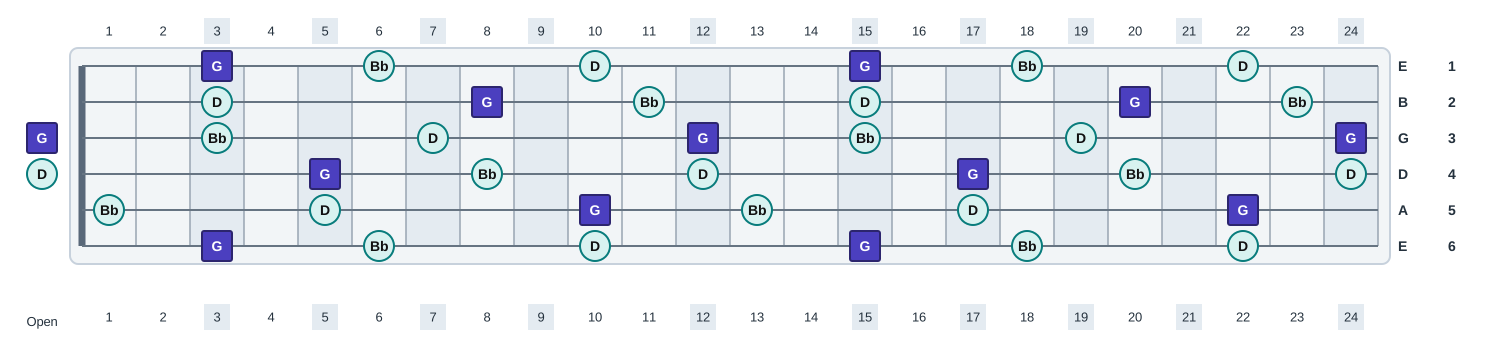
Open this arpeggio in the fretboard tool
Start with G Minor loaded, then adjust tuning, labels, colors, fret count, and orientation.
Open in interactive fretboard