Guitar scale
G Minor Pentatonic Guitar Scale
G Minor Pentatonic is a five-note scale built from G, Bb, C, D, and F. Use it to study the scale's notes, interval formula, and guitar fretboard positions.
- Notes
- G, Bb, C, D, F
- Formula
- 1 b3 4 5 b7
- Semitones
- 0 3 5 7 10
How to read this scale
The notes are shown as pitch classes first. Square markers representG root notes in the fretboard view, while circular markers represent the other notes in the scale.
Use the interactive fretboard to locate the G root notes and connect the remaining minor pentatonic tones across standard tuning.
Sound and defining tones
G minor pentatonic is anchored by b3 (Bb) and b7 (F). Omitting the second and sixth removes the half-step tensions of the full natural-minor scale and leaves a compact, guitar-friendly minor vocabulary.
- Characteristic tones
- b3Bbb7F
Fretboard diagram
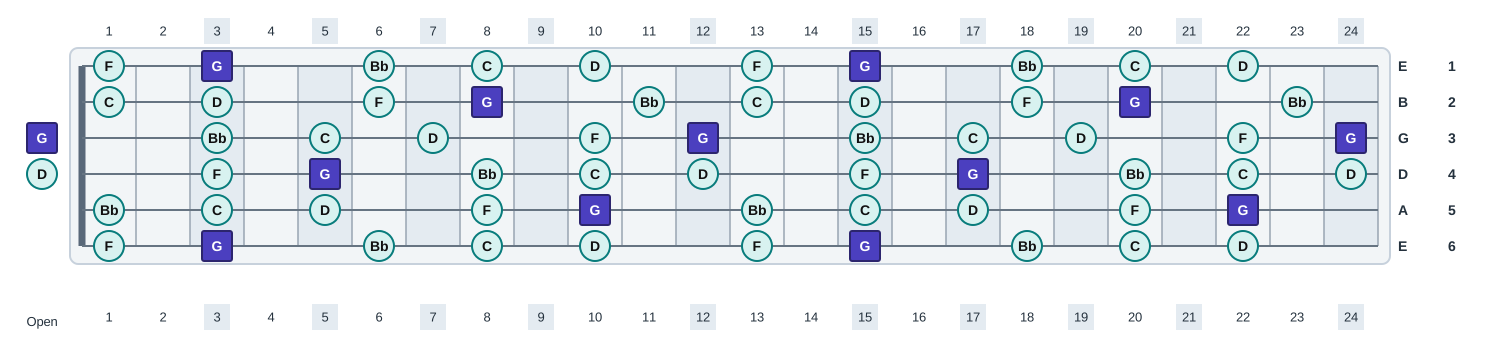
Open this scale in the fretboard tool
Start with G Minor Pentatonic loaded, then adjust tuning, labels, colors, fret count, and orientation.
Open in interactive fretboardCommon chords and contexts
Use G minor pentatonic over G minor harmony, power-chord riffs, and many blues or rock settings. Over dominant blues, treat bends and chord-tone targeting as part of the style.
- Use G minor pentatonic over G minor chords, power-chord riffs, and many blues or rock solos.
- Its five-note layout removes the half-step tensions from natural minor, which makes it easy to phrase on guitar.
Practice this scale on guitar
- Play G Minor Pentatonic from one G root to the next in at least two fretboard positions, saying each note name and scale degree aloud.
- Locate b3 (Bb) and b7 (F) inside every connected position and bend or slide into them from a neighboring fret where the style allows.
- Limit yourself to three adjacent strings over minor backing centered on G, then connect that phrase to the next position without restarting the pattern.