Guitar tuning
7-String Standard Tuning
Seven-string standard adds a low B below six-string standard tuning.
- Notes low to high
- B, E, A, D, G, B, E
- Strings
- 7
- Default frets
- 24
- Open pitch range
- B1 to E4
- 24-fret pitch range
- B1 to E6
- Also called
- B Standard 7-String, BEADGBE
How this tuning changes the guitar
Seven-string standard adds a low B beneath ordinary six-string standard tuning. The upper six strings remain E-A-D-G-B-E, so existing six-string chord, scale, and arpeggio shapes transfer unchanged there.
Fretboard and chord implications
The low B-to-E interval is a perfect fourth, extending familiar lower-string pattern logic by one string. Use the seventh string for additional roots, fifths, bass movement, and wider voicings rather than simply doubling every low note.
7-String Standard Tuning fretboard notes
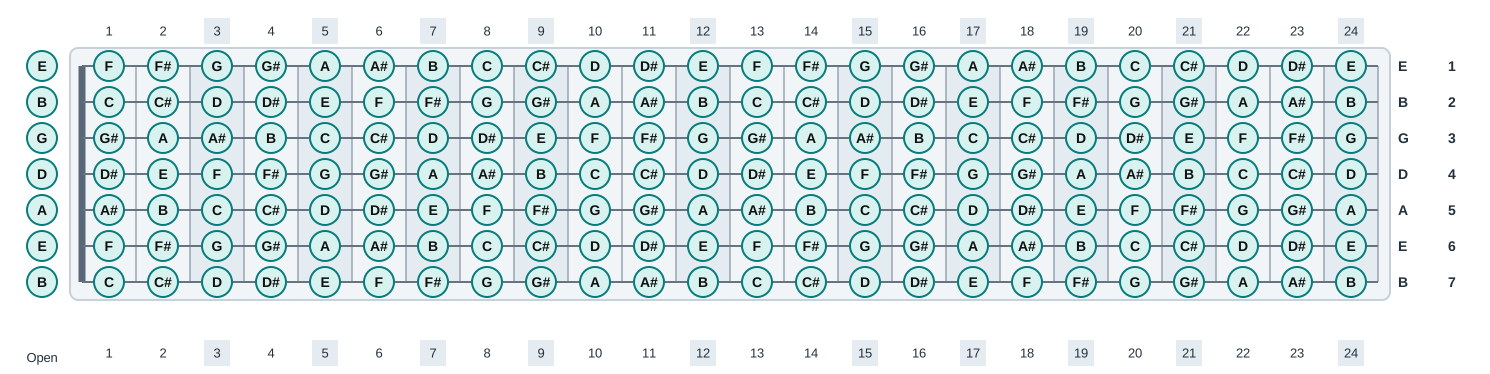
7-String Standard Tuning string notes
| String | Note | Pitch |
|---|---|---|
| 7 | B | B1 |
| 6 | E | E2 |
| 5 | A | A2 |
| 4 | D | D3 |
| 3 | G | G3 |
| 2 | B | B3 |
| 1 | E | E4 |
Common uses
- extended-range guitar
- progressive heavy music
- jazz
- extended-range lead and rhythm guitar
Practice this tuning
- Tune from low to high as B E A D G B E, then play each open string while saying its note name and string number aloud.
- Extend one familiar six-string B minor scale position onto the seventh string, naming each added note and interval.
- Voice a B minor progression twice: once in the low register using string 7 and once on the unchanged upper six strings.
Open this tuning in the fretboard tool
Start with 7-string standard tuning loaded, then adjust root, scale, fret count, labels, colors, and orientation.
Open in interactive fretboard