Guitar tuning
D Standard Tuning
D standard lowers all six strings by a whole step and keeps standard-tuning intervals intact.
- Notes low to high
- D, G, C, F, A, D
- Strings
- 6
- Default frets
- 24
- Open pitch range
- D2 to D4
- 24-fret pitch range
- D2 to D6
- Also called
- Whole-Step Down, DGCFAD
How this tuning changes the guitar
Every string is one whole step below standard tuning, preserving all standard-tuning intervals and fingering relationships. The lower tension and pitch may require an appropriate string gauge and setup for clean intonation.
Fretboard and chord implications
Standard-tuning shapes transfer unchanged but sound one whole step lower: an E shape produces D, and an A shape produces G. Scale and arpeggio box shapes remain intact at the same fret numbers.
D Standard Tuning fretboard notes
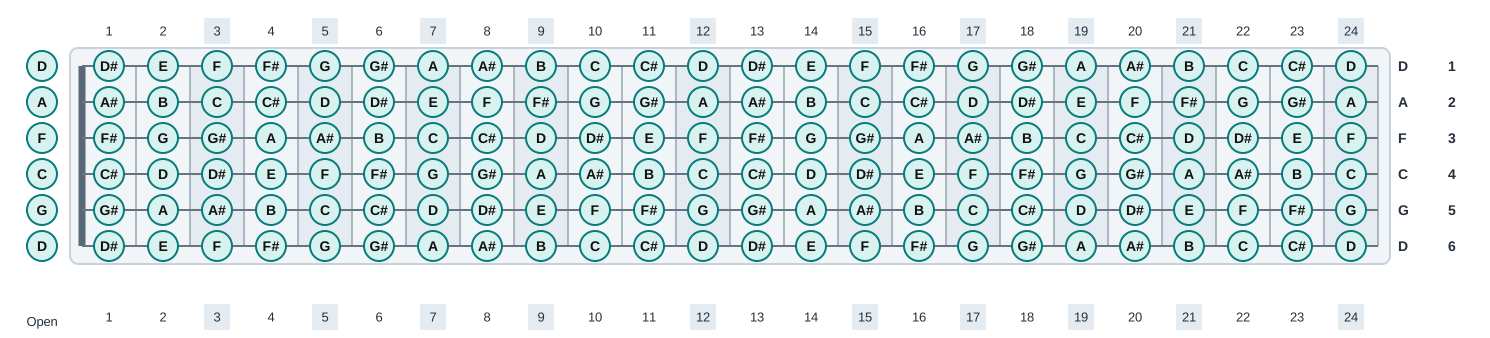
D Standard Tuning string notes
| String | Note | Pitch |
|---|---|---|
| 6 | D | D2 |
| 5 | G | G2 |
| 4 | C | C3 |
| 3 | F | F3 |
| 2 | A | A3 |
| 1 | D | D4 |
Common uses
- heavy music
- doom
- hard rock
- lower vocal keys
Practice this tuning
- Tune from low to high as D G C F A D, then play each open string while saying its note name and string number aloud.
- Play E-, A-, and D-based open shapes, then name the D-, G-, and C-based concert chords that result.
- Take a standard-tuning progression and perform it one whole step lower with identical fingerings, checking each sounding root against the fretboard chart.
Open this tuning in the fretboard tool
Start with d standard tuning loaded, then adjust root, scale, fret count, labels, colors, and orientation.
Open in interactive fretboard