Guitar tuning
DADGAD Tuning
DADGAD is a suspended open tuning that creates a Dsus4 sound rather than a major or minor chord.
- Notes low to high
- D, A, D, G, A, D
- Strings
- 6
- Default frets
- 24
- Open pitch range
- D2 to D4
- 24-fret pitch range
- D2 to D6
- Also called
- D Modal, Celtic Tuning
How this tuning changes the guitar
Relative to standard tuning, the first, second, and sixth strings are lowered to D, A, and D. The open strings spell D-A-D-G-A-D, creating Dsus4 rather than a major or minor chord because no third is present.
Fretboard and chord implications
The repeated D and A strings make drones and movable modal shapes central to the tuning. Standard chord forms do not transfer wholesale, so locate the third deliberately whenever the harmony needs to sound clearly major or minor.
DADGAD Tuning fretboard notes
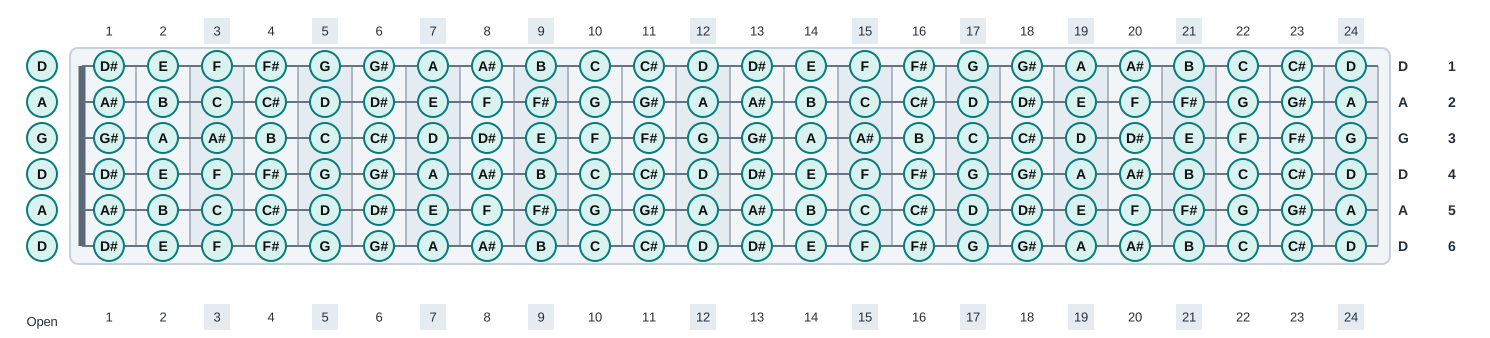
DADGAD Tuning string notes
| String | Note | Pitch |
|---|---|---|
| 6 | D | D2 |
| 5 | A | A2 |
| 4 | D | D3 |
| 3 | G | G3 |
| 2 | A | A3 |
| 1 | D | D4 |
Common uses
- Celtic music
- folk
- acoustic guitar
- drone-based playing
Practice this tuning
- Tune from low to high as D A D G A D, then play each open string while saying its note name and string number aloud.
- Sustain open D and A drones while finding every F sharp and F natural in the first twelve frets, comparing major and minor colors.
- Build a D modal progression that keeps at least one open D or A ringing through every voicing.
Open this tuning in the fretboard tool
Start with dadgad tuning loaded, then adjust root, scale, fret count, labels, colors, and orientation.
Open in interactive fretboard