Guitar tuning
Standard Tuning
Standard tuning is the default six-string guitar tuning and the reference point for most scale, chord, and fretboard patterns.
- Notes low to high
- E, A, D, G, B, E
- Strings
- 6
- Default frets
- 24
- Open pitch range
- E2 to E4
- 24-fret pitch range
- E2 to E6
- Also called
- E Standard, EADGBE
How this tuning changes the guitar
Standard tuning uses perfect fourths between adjacent strings except for the major third between G and B. That irregular interval keeps common chord voicings compact while allowing scale patterns to repeat predictably across most string pairs.
Fretboard and chord implications
Most published guitar chord, scale, arpeggio, and notation references assume standard tuning. Treat it as the baseline for comparing every alternate tuning on this site.
Standard Tuning fretboard notes
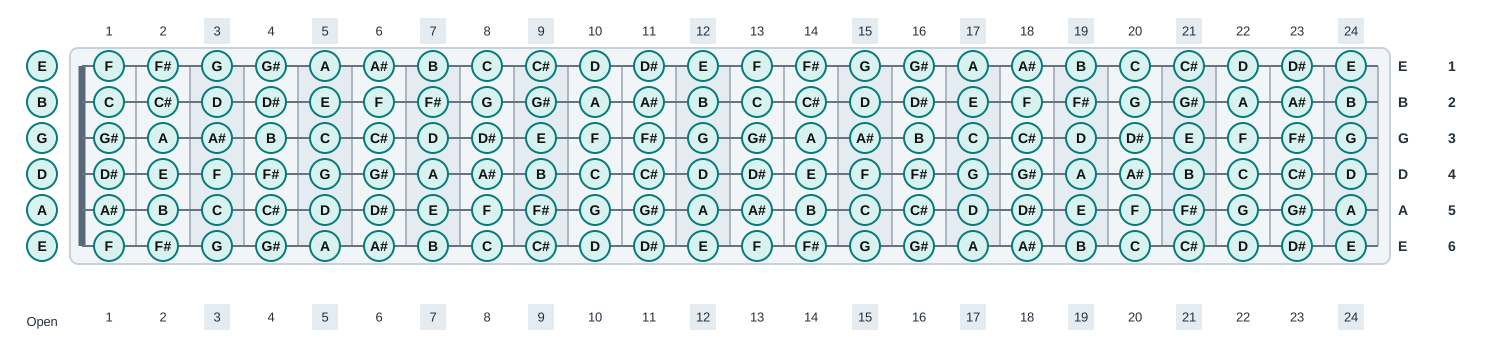
Standard Tuning string notes
| String | Note | Pitch |
|---|---|---|
| 6 | E | E2 |
| 5 | A | A2 |
| 4 | D | D3 |
| 3 | G | G3 |
| 2 | B | B3 |
| 1 | E | E4 |
Common uses
- general guitar study
- rock
- pop
- blues
- jazz
- country
Practice this tuning
- Tune from low to high as E A D G B E, then play each open string while saying its note name and string number aloud.
- Play one octave of E major on each available string set and note where the pattern changes as it crosses the G-to-B string pair.
- Move a familiar open chord progression into two closed positions, naming the root note of every chord on the lowest sounding string.
Open this tuning in the fretboard tool
Start with standard tuning loaded, then adjust root, scale, fret count, labels, colors, and orientation.
Open in interactive fretboard