Guitar tuning
7-String Drop G Tuning
Seven-string drop G transposes the drop-A layout down a whole step for a deeper modern extended-range sound.
- Notes low to high
- G, D, G, C, F, A, D
- Strings
- 7
- Default frets
- 24
- Open pitch range
- G1 to D4
- 24-fret pitch range
- G1 to D6
- Also called
- GDGCFAD
How this tuning changes the guitar
Strings 1 through 6 use D standard, and the seventh string drops another whole step to G. The lowest three open strings form G-D-G across strings 7, 6, and 5.
Fretboard and chord implications
Movable one-finger power chords work across the lowest three strings, while D-standard geometry remains intact on the upper six. The lower pitch may call for tension and setup choices appropriate to the guitar's scale length.
7-String Drop G Tuning fretboard notes
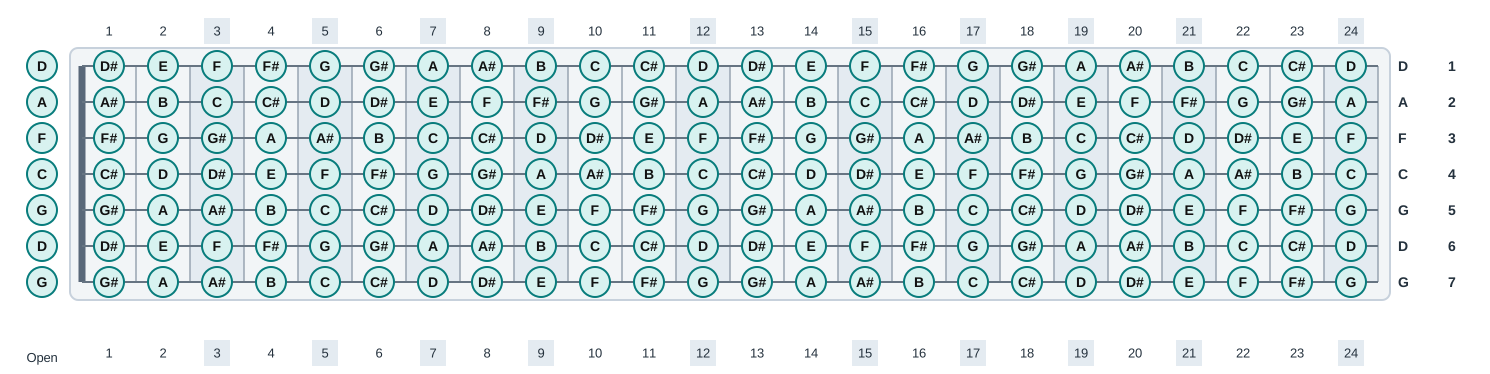
7-String Drop G Tuning string notes
| String | Note | Pitch |
|---|---|---|
| 7 | G | G1 |
| 6 | D | D2 |
| 5 | G | G2 |
| 4 | C | C3 |
| 3 | F | F3 |
| 2 | A | A3 |
| 1 | D | D4 |
Common uses
- modern heavy music
- low-tuned heavy music
- djent
- low-tuned extended-range riffs
Practice this tuning
- Tune from low to high as G D G C F A D, then play each open string while saying its note name and string number aloud.
- Map G roots, D fifths, and B flat minor thirds across the bottom four strings, then connect them to upper-register G minor shapes.
- Build a G minor riff with low power chords and answer it with a melody at least one octave higher to use the full seven-string range.
Open this tuning in the fretboard tool
Start with 7-string drop g tuning loaded, then adjust root, scale, fret count, labels, colors, and orientation.
Open in interactive fretboard